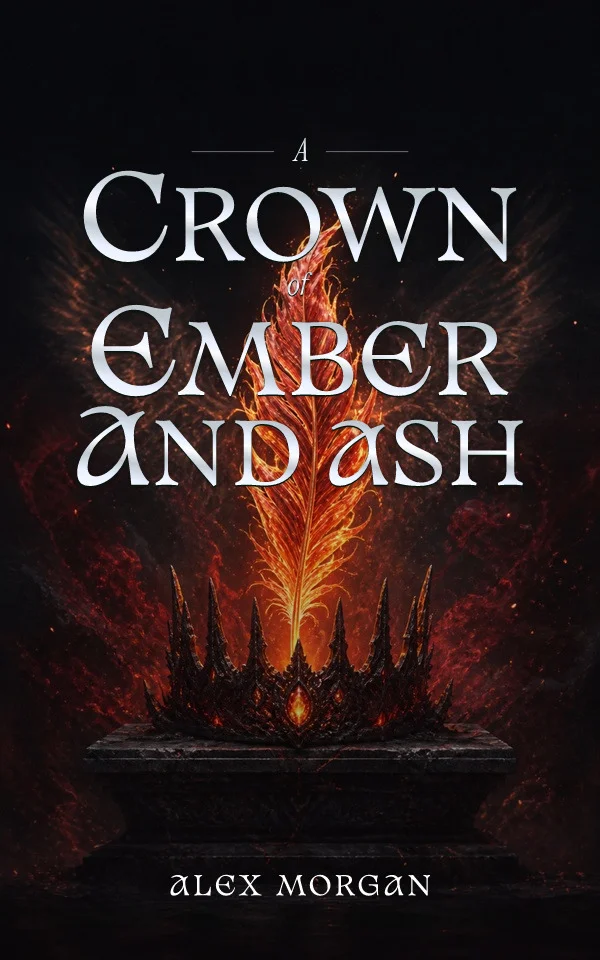

Where Canva works well
Canva lowers the friction of starting a front cover. Its book-cover surface provides customizable layouts, search and filtering, stock media, familiar alignment controls, and PNG, JPG, and PDF exports. Authors making simple typographic or stock-led concepts can iterate quickly, and collaborators are likely to understand the interface without specialist training.
The separate mockup generator is useful after design approval, with multiple book forms and raster, vector, and PDF export choices documented on Canva's site.
The print wrap is a specification problem
A paperback wrap is back plus spine plus front plus bleed. Canva supports custom-size canvases, rulers, guides, and PDF Print, but its public book-cover guidance does not document an automatic spine formula tied to binding, paper, and final page count. That does not mean a wrap is impossible; it means the author must obtain the complete dimensions first and build the canvas manually.
Import the printer template as a locked guide, keep text out of folds and barcode zones, and recheck the canvas when pagination changes. PDF export settings do not correct an incorrectly sized document.
Rights and AI still need a record
Canva's AI terms say users generally own output subject to incorporated licensed content, non-uniqueness, usage limits, and responsibility for commercial suitability. Terms can change. Save the policy version, source assets, prompts, and export date with the project, and do not assume an AI feature removes third-party-rights risk.
Canva is the better choice when broad design flexibility matters. A book-specific tool is the better fit when synchronized front, back, spine, print calculations, and publisher preflight are the main problem.