



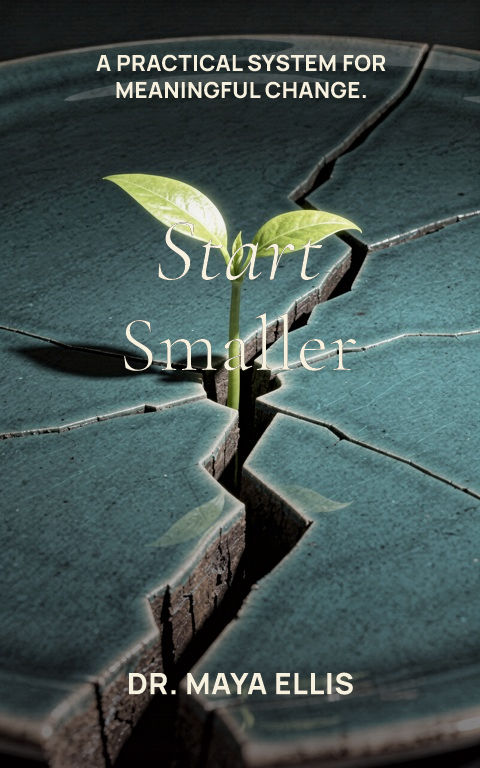




Transformation in one object
Change the state, scale, or relationship of one familiar object to express the method.

Build around a credible transformation, an identifiable reader, and a calm path forward. Start with eight distinct directions, then replace the art and edit every type layer.

How do you make a self help book cover?Start from a credible transformation, an identifiable reader, and a calm path forward, then keep the title, subtitle, author, and series lines as editable typography over replaceable artwork. A watermarked draft is free; an active pass unlocks the full-resolution ebook file, calculated KDP print wrap, and Interior exports.
Choose a template to open it with editable type and artwork.
A self-help cover should make the intended change understandable without guaranteeing a result the book cannot support. Define who the book helps, which problem it addresses, and the method or perspective it offers. Then choose an emotional register: reassuring and humane, direct and energetic, research-led, reflective, or practical. The most effective front covers usually communicate one transformation rather than illustrating every habit, chapter, or benefit.
Title and subtitle need to work as one promise. Let the title create a memorable idea, question, or command, while the subtitle clarifies the audience, scope, and useful outcome. Use scale, weight, line breaks, and negative space to establish the reading order. Credentials or a foreword line can add trust when they are genuinely relevant, but neither should become louder than the reader's reason to open the book.
Choose one ownable visual system: a transformed everyday object, a clear path or threshold, a restrained editorial portrait, a simple diagram-like relationship, or typography with one meaningful intervention. Avoid default combinations of sunsets, mountain silhouettes, lotus flowers, and generic upward arrows unless that image is specifically earned by the manuscript. Extend the system across the spine and use a calmer back panel for the blurb, endorsements, author note, and barcode.
Check the cover at storefront size: the title and focal image should still read clearly. For print, keep important details away from trim and leave a calm back-cover area for copy and barcode.
Change the state, scale, or relationship of one familiar object to express the method.
Let the title make the idea memorable and the subtitle explain who the book is for.
Use an editorial portrait or warm abstract form without turning the cover into a generic wellness ad.
It should identify the reader's problem or desired change, establish a credible tone, and make the book's distinct method or perspective memorable.
A subtitle is optional. It can clarify the audience, scope, method, or outcome when the main title is short or conceptual.
Yes. Keep the front editable, then calculate the back, spine, bleed, and barcode area from the final print specifications.