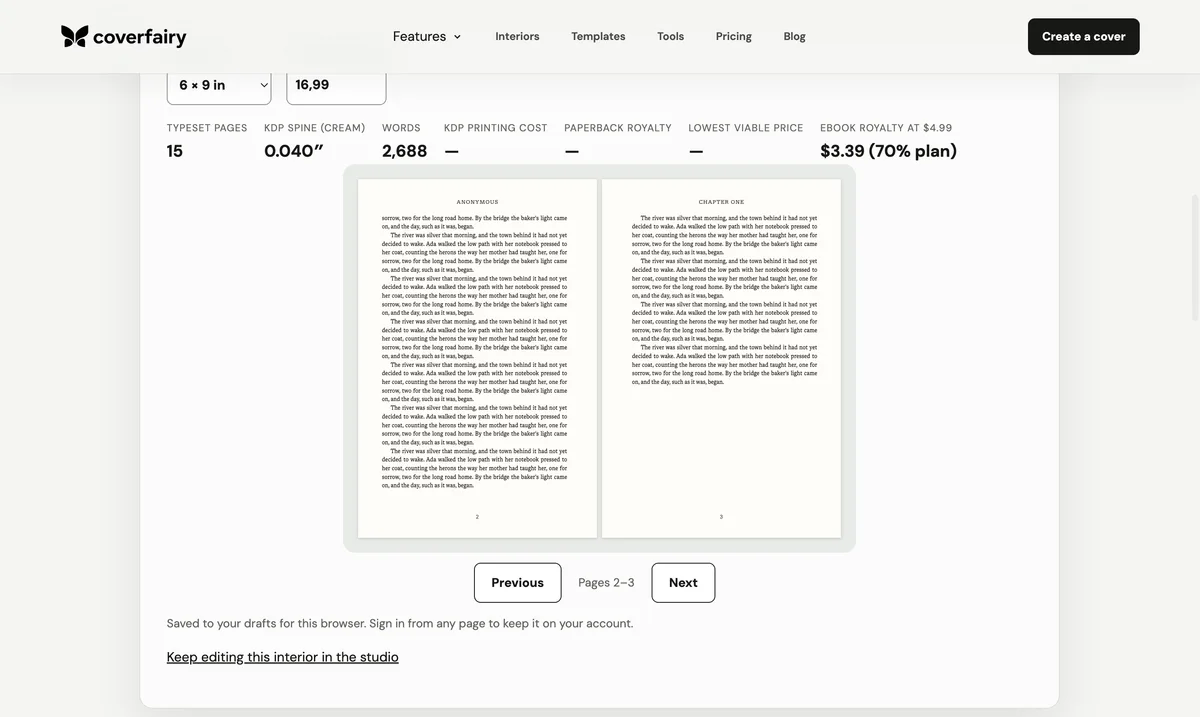


Sixteen point is a useful production starting point, not a universal accessibility badge. Two fonts at 16 point can differ visibly in lowercase size, width, weight, punctuation, and spacing. Large-print design works only when the complete page supports the type and the edition is proofed at physical size.
Point size measures a box, not perceived readability
The nominal point includes vertical space around the letterforms, so a face with a large x-height can look larger than another at the same setting. Stroke contrast, counters, apertures, punctuation, and weight also change recognition. Set the manuscript's real paragraphs and compare them at actual print size rather than choosing from a screen menu.
Increase spacing and protect line length
Larger type needs leading that keeps lines distinct without breaking paragraphs into stripes. It also fits fewer characters across the page. If the original trim produces constant hyphenation, loose justified lines, or excessive page turns, choose a larger supported trim and rebuild the margins instead of squeezing the type.
Scale the whole information system
Chapter titles, subheads, running heads, folios, contents entries, notes, captions, tables, and index entries all need readable treatment. Enlarging only body prose leaves the reader struggling precisely where navigation matters. Keep hierarchy clear through space and weight rather than faint color or ornamental complexity.
Recompose rather than enlarge
A scaled PDF preserves old line and page breaks and enlarges the physical page boundary with the text. A true large-print edition runs the manuscript through a new trim, typography, margin, line-breaking, and pagination system. It needs a regenerated contents and index plus a separate cover calculated from the new final count.
Prove the page with real use
Print representative spreads at 100 percent and order a bound proof. Ask readers to navigate a chapter, contents, notes, and a section with italics or numbers. Check glare, show-through, gutter effort, book weight, and whether the page can be followed without losing the next line. Pair the print edition with a reflowable ebook for readers who need more control.
Sources and verification
Requirements can change. Check the linked instructions before you publish or upload a file.
By Coverfairy Editorial · Published · Updated