
Manuscript format is for submission, not publication
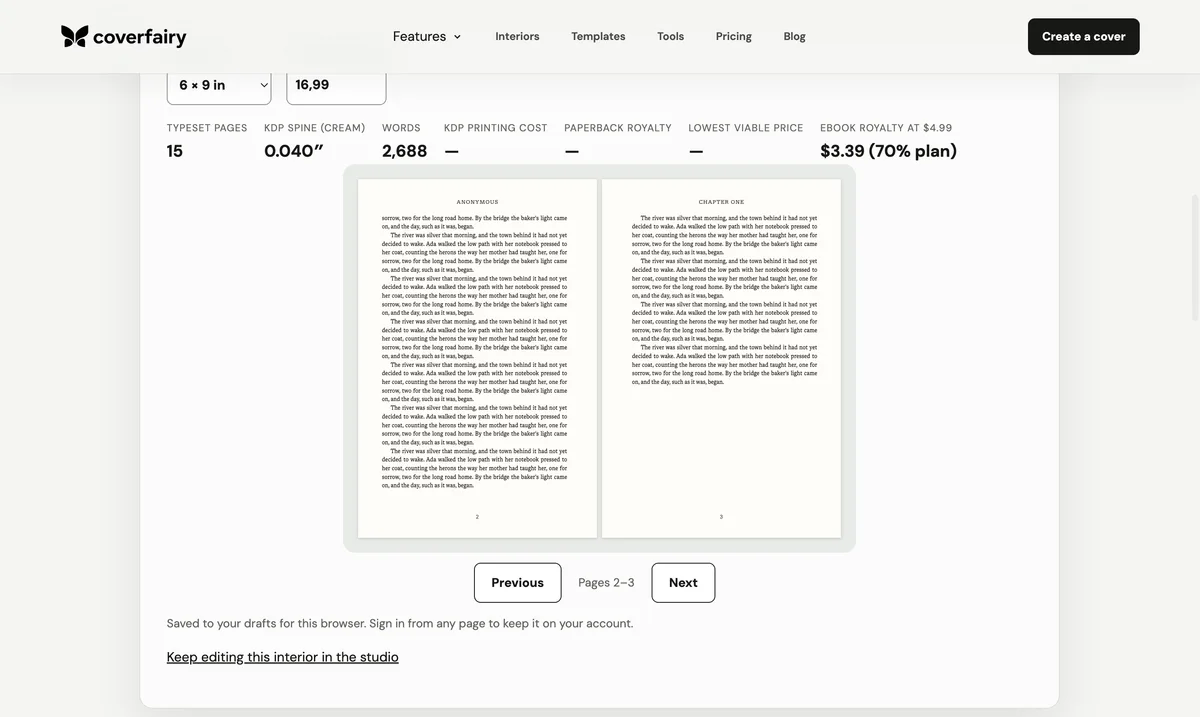
A manuscript is a working editorial document. Its generous spacing, predictable type, visible page numbers, and plain hierarchy make it easy for an agent or editor to read, annotate, quote, and discuss. A published interior solves a different problem: it uses book typography, designed chapter openings, running heads, folios, trim-specific margins, and a fixed print or reflowable ebook output. Do not style a submission to resemble the finished novel.
Keep the source editable. A Word document is easier for a recipient to review or request changes to than a locked PDF. Submit a PDF only when the recipient explicitly asks for one, and never let a decorative design obscure the underlying chapter and paragraph structure.
Set the page before styling the prose
Use one-inch margins on every side and ordinary portrait pages. Set the body in a 12-point monospaced face such as Courier New and double-space it without extra space before or after paragraphs. Indent each new body paragraph by half an inch with the paragraph setting rather than tabs or repeated spaces. Align prose left and leave the right edge ragged.
These conventions are intentionally conservative. They create a stable number of characters and lines per page, leave room for notes, and prevent the author from using design to disguise length. If the receiving organization publishes its own manuscript template, copy its page size, type, spacing, and file-format instructions instead.
Build a useful title page
Place contact details in the upper-left corner when requested, then include the approximate word count. Center the book title and author byline on the page. Use the same title, spelling, capitalization, and byline that appear in the query or cover letter so the files cannot be confused during review.
Do not add cover artwork, ornamental borders, endorsements, an ISBN, a copyright page, retail metadata, or a contents page to a novel submission unless the guidelines require them. The title page identifies the work; it is not the published front matter.
Format chapters, paragraphs, and scene breaks consistently
Start each major chapter on a new page and give the heading a repeatable treatment. Keep body paragraphs indented, except where the recipient's convention or a deliberate scene opening calls for a flush first paragraph. Represent a scene break with a centered, unmistakable mark such as a number sign instead of relying on blank vertical space that can disappear during conversion.
Preserve italics according to the recipient's request; traditional manuscript convention may underline text that will later be italic, while many contemporary submission systems accept italics directly. Avoid manual line breaks, multiple tabs, stacks of empty paragraphs, and spaces used for alignment. They make later editing and conversion unreliable.
Add a running header and automatic page numbers
After the title page, use a short running identifier such as SURNAME / SHORT TITLE / page number. Insert a real automatic page-number field rather than typing the number on each page. The header should identify a separated page without competing with the manuscript text.
Check that the title page and subsequent pages behave the way the recipient expects. Some guidelines omit the title-page header or begin visible numbering on the first story page. Because the downloadable file remains editable, those details can be changed after reading the destination's instructions.
Run the final submission check
Confirm the requested file type, filename, word-count convention, contact information, title, byline, genre, and any synopsis or sample-page limit. Open the exact attachment you plan to send and check the first page, the first chapter, several scene breaks, and the final page. Search for comments, tracked changes, hidden notes, placeholder text, and personal metadata you did not intend to share.
A clean standard manuscript reduces avoidable friction, but it cannot make one set of rules universal. Treat the template as the starting state. The submission page for the specific agent, editor, publication, contest, or publisher is the final authority.
Sources: The Literary Consultancy: Manuscript Formatting Guidelines · Free standard manuscript formatter · Published-book formatting guide. Reviewed ; recheck current platform requirements before production.